Understanding Pool Water Chemistry: A Complete Guide
Understanding Pool Water Chemistry: A Complete Guide
Introduction
The maintenance of a swimming pool’s crystal clear appearance demands more than chlorine addition. It requires a proper understanding of pool water chemistry. The correct management of water balance provides both a pleasant swimming experience and protects your pool equipment and decreases your need for regular chemical additions. The following complete guide will explain pool chemistry components while providing essential maintenance guidance using Deep Blue products.
The Deep Blue company simplifies pool maintenance through their user-friendly measuring tools combined with scientifically validated chemicals along with professional support. We maintain our BISHTA membership to guarantee that all our solutions reach the highest standards for safety and quality. This article presents an overview of pool water chemistry elements together with guidance for year-round pool maintenance.
Why Pool Water Chemistry Matters
Balanced pool chemistry:
Keeps the water clear and inviting
Prevents eye and skin irritation
Stops algae and bacterial growth
Protects pool surfaces and equipment
Helps sanitisers work effectively
Proper handling of pool chemistry will produce long-term savings together with decreased maintenance effort.
Key Elements of Pool Chemistry
1. pH Level
The pH scale determines whether your pool water has acidic or alkaline properties. The proper pH level should be maintained between 7.2 and 7.6. Acidic water develops when pH remains low because it causes metal fixtures to corrode and damages liners and creates skin and eye irritation. When pH levels increase above the normal range the effectiveness of chlorine decreases while surfaces develop scale deposits.
How to Adjust pH:
The pH levels should be raised using Deep Blue pH Increaser when they drop below 7.2.
When pH levels exceed 7.6 you should apply Deep Blue pH Reducer.
Our pH products include dosing caps along with straightforward instructions for use.
2. Total Alkalinity (TA)
Total Alkalinity plays an essential role in maintaining pH stability. The recommended level of Total Alkalinity exists between 80–120 ppm. When alkalinity is low pH levels fluctuate quickly but high levels create challenges when adjusting pH.
The pH stabilization process becomes straightforward with Deep Blue’s Alkalinity Plus since it contains specific dosage tables for different pool capacities.
3. Sanitiser Levels
Sanitiser functions as the protective agent which removes dangerous microorganisms from swimming water. The majority of swimming pools operate with chlorine or bromine or oxygen-based sanitizing systems. Deep Blue offers all three:
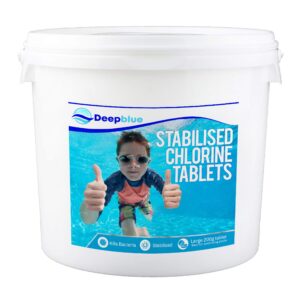
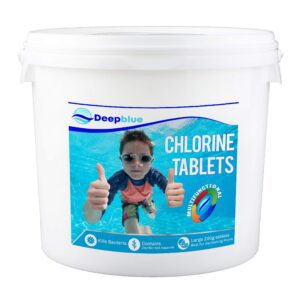
Chlorine Tablets & Granules: Fast-acting and ideal for most pools
Bromine: Perfect for heated pools or those with sensitive skin
Oxygen-Based Products: Chlorine-free and environmentally friendly
For optimal results maintain chlorine between 1–3 ppm and bromine between 3–5 ppm. The water chemistry can be easily monitored with Deep Blue test strips and digital meters.
4. Calcium Hardness
This measures the amount of dissolved calcium in your pool water. When the concentration of dissolved calcium drops below the required level the water turns corrosive. High concentrations of calcium will lead to scale formation.
Ideal range: 150–250 ppm for vinyl pools, 200–275 ppm for plaster
Use Deep Blue Calcium Hardness Increaser as needed
5. Stabiliser (Cyanuric Acid)
The function of stabiliser is to defend chlorine from UV light degradation. The absence of stabiliser results in excessive chlorine depletion particularly in outdoor swimming pools.
Ideal level: 30–50 ppm
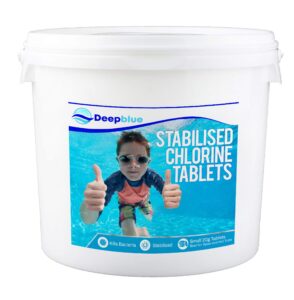
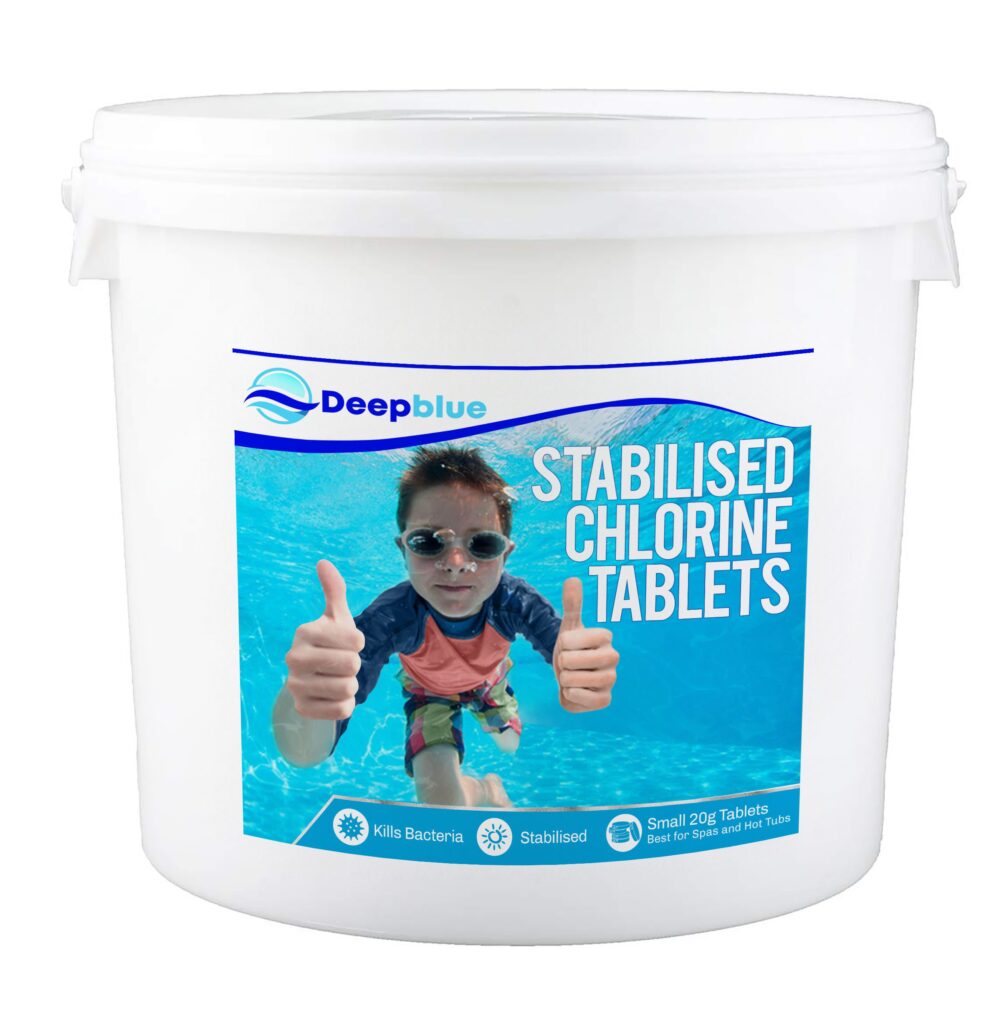
The correct balance can be maintained by using stabilised chlorine tablets from Deep Blue.
Testing and Monitoring Water Chemistry
Deep Blue recommends weekly pool water testing for at least two times during swimming season while weekly testing is sufficient for off-season periods.
Tools We Recommend:
Deep Blue Test Strips: Quick and simple for home use
Digital Testers: Accurate and easy to read
Professional Testing Kits: For in-depth analysis
Keep a record of your readings because this helps you detect problems before they become serious issues.
Common Water Chemistry Problems and Fixes
Cloudy Water
Cause: High pH, low chlorine, poor filtration, or high calcium
Solution: Test and rebalance water. Shock the pool and check your filter system.
Algae Growth
Cause: Low chlorine levels or poor circulation
Deep Blue Algaecide combined with water shock treatment serves as the solution.
Chlorine Smell or Skin Irritation
Cause: Chloramines (used-up chlorine)
The solution involves using Deep Blue non-chlorine shock to break down chloramines in the water.
Eco-Friendly Water Care Solutions
Deep Blue sanitisers which use non-chlorine and oxygen-based disinfection agents deliver strong sanitizing power without creating toxic byproducts. Families and environmentally conscious pool owners particularly choose these products.
Deep Blue ships their products through low-emission delivery methods and uses recyclable packaging. Our dedication to environmental sustainability continues through our efforts of cost reduction and water preservation.
Support and Expert Help
You can always reach out for help whenever you need direction about your next steps. The online library contains step-by-step guides and videos that help you resolve common issues and perform seasonal maintenance tasks.
Our trained support professionals can be reached through the Contact Us page. Our team will assist you from the beginning to the end of your pool care experience.
Join the Deep Blue Loyalty Programme
Deep Blue customers become part of an organization dedicated to delivering quality products at affordable prices and delivering results. Our customers enjoy:
Bonuses and exclusive discounts
Priority support for members
Special offers on seasonal products
Conclusion
Pool water chemistry needs proper understanding and management to create a secure swimming environment that provides a comfortable experience. Deep Blue’s complete selection of tested chemicals combined with expert guidance and sustainability efforts will give you everything needed to achieve perfectly clear and balanced pool water.
FAQs
How often should I test my pool water?
The testing should happen at least twice each week during summer months and once per week during the colder seasons.
What’s the best way to adjust pH?
Use Deep Blue pH+ or pH- and follow the instructions on the label. You should use the measuring tools included to determine the proper dose amount.
Is chlorine better than bromine?
Both work well. The speed of chlorine action is higher than bromine action yet bromine maintains stability longer while being suitable for hot tubs and sensitive skin types. The company provides both chemical options according to customer requirements.
Can I get eco-friendly pool chemicals?
Deep Blue provides non-chlorine shock and oxygen-based sanitisers as eco-friendly alternatives which provide effective water disinfection.
How do I join the loyalty programme?
The loyalty programme membership begins after you create your website account during your first purchase.
Related articles