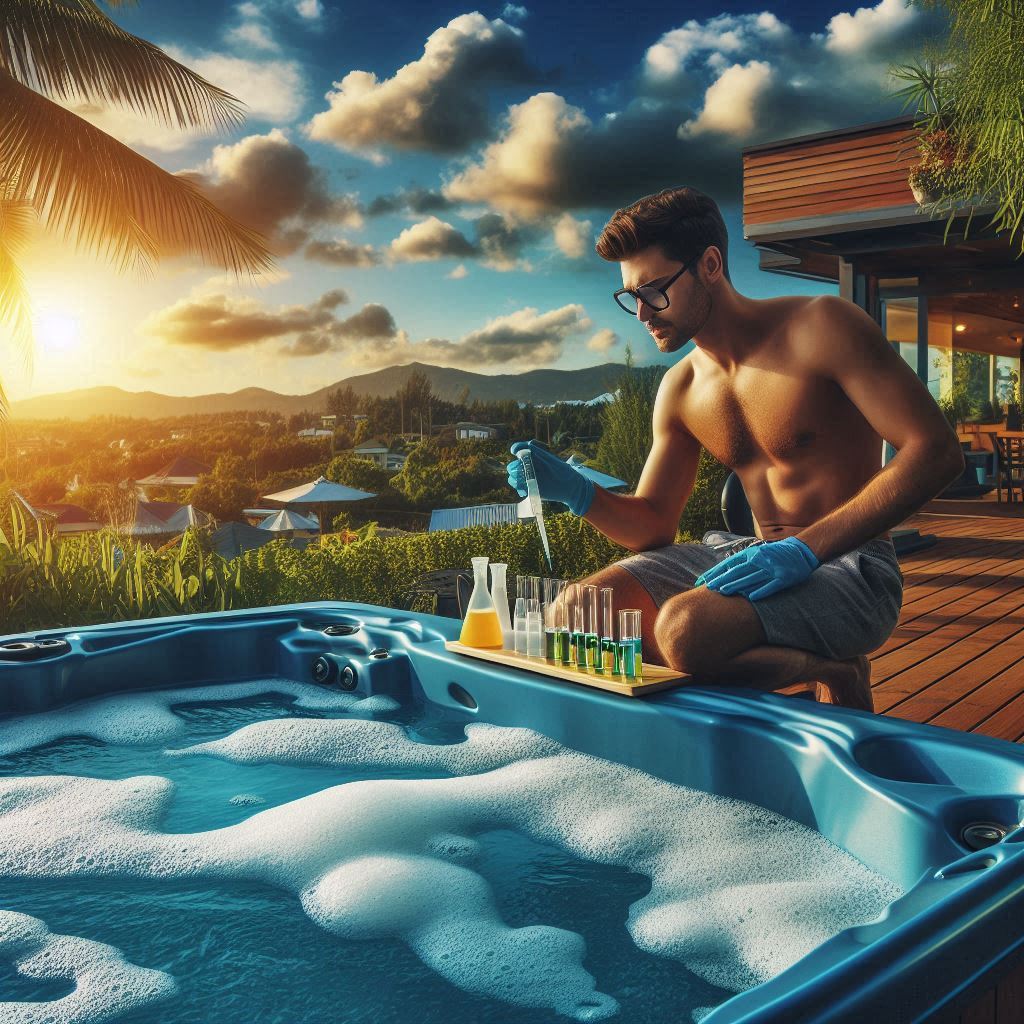



The process of routine water testing stands as a critical requirement for maintaining pool water safety and comfort and hygiene standards for users. Through proper testing facilities achieve better contamination removal while protecting the surrounding plants and pool environment while minimizing chemical usage.
A pool without regular testing will transform into a dangerous habitat for dangerous bacteria while causing skin discomfort and eye problems together with expensive maintenance problems. Proper testing at scheduled intervals is essential for proper pool management.
Regular tests of the following parameters are essential to ensure a pool environment remains safe and balanced.
The primary disinfectant used in swimming pools is chlorine. Pool managers need to track free chlorine levels because they represent active bacterial killing agents and total chlorine levels which include chemical by-products. Free chlorine in UK pools needs to reach 1.0 mg/L but may decrease to 0.5 mg/L with the use of UV or ozone treatments.
Hot tubs and spas commonly use bromine as a disinfectant because it works better in heat and generates less skin reactions than chlorine does.
The combination of PHMB with hydrogen peroxide functions as an alternative disinfectant.
Ozone operates as an effective disinfectant which removes resistant organisms thus enabling users to use reduced chlorine amounts.
The pH level controls both disinfection capability and user comfort so the ideal range should be between 7.2-7.4.
Total Alkalinity functions as a pH stabilizer that avoids abrupt changes to water chemistry.
Outdoor pool facilities use cyanuric acid mainly for its ability to protect chlorine from sun exposure.
The water will either form scales or damage pool surfaces based on the calcium hardness levels.
The surfaces get damaged by low TDS concentrations and excessive scaling occurs with elevated TDS levels.
Phosphate Levels: Excess phosphates can encourage algae growth, especially in outdoor pools.
The water quality decreases when the Total Dissolved Solids (TDS) level becomes excessive. Water dilution serves as a solution when TDS reaches excessive levels.
Salt is essential for saltwater pools because it transforms into chlorine through the electrolysis process.
Clear water serves as a fundamental requirement for both safety and visual clarity. Low turbidity levels demonstrate that filtration systems and chemical composition are properly balanced.
Water Balance: A combination of calcium hardness, total alkalinity, and pH that affects whether water is corrosive or will cause scaling.
Pool safety requires regular microbiological tests to verify the absence of dangerous bacteria. Professional laboratory testing for coliforms and E. coli and Pseudomonas Aeruginosa provides both peace of mind and safety assurance for swimming pools.
The recommended frequency for testing depends on pool usage patterns and local authorities’ regulations. General recommendations include:
Daily: Test for disinfectant levels and pH.
Weekly: Check alkalinity, calcium hardness, cyanuric acid, water balance, and TDS.
Monthly: Conduct turbidity and microbiological tests.
Various testing approaches exist which provide different levels of precision along with their respective benefits and disadvantages:
Test Strips: Quick and affordable but less precise.
The Colorimetric Methods depend on color transformations to measure chemical concentrations yet provide better results than test strips but require human interpretation of results.
The digital devices called photometers provide accurate measurements through color-based analysis and data logging functions.
The electrochemical meters provide high precision measurements for pH levels and TDS and conductivity.
Turbidity Meters: Essential for detecting turbidity levels that may not be visible to the naked eye.
To get dependable results always use these practices during testing procedures:
Use clean equipment and fresh reagents.
Following established testing procedures with precision is essential.
Readings that are out of range require sample dilution before testing.
The proper maintenance of instruments depends on regular calibration procedures.
Several water samples should be collected at different locations to obtain an accurate outcome.
The process of regular accurate water testing is essential for providing both safety and enjoyment when using pools. These fundamental parameters require proper management to maintain water quality while protecting swimmers’ health along with extending pool equipment lifespan.
Your quote is empty
Already have an account? Login or Create an account